X

News

Innovative Chilean Device to Reduce Electricity Consumption Costs

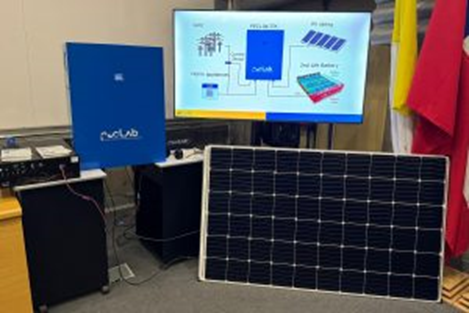
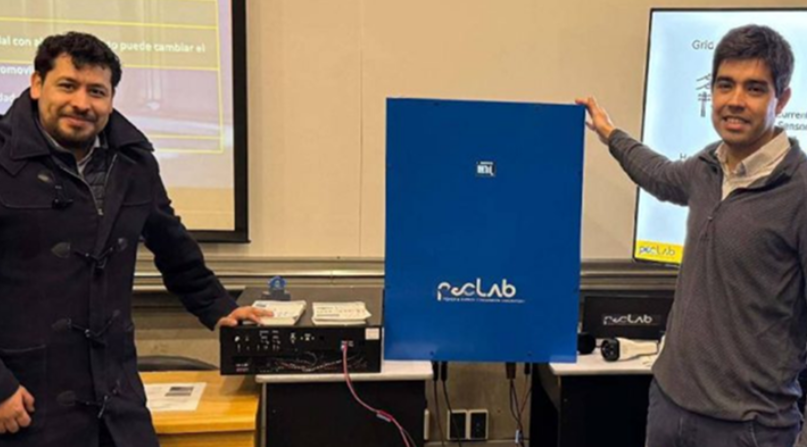
An innovative Chilean device will enable families to reduce their electricity bills. Developed by Javier Pereda and Félix Rojas, professors of Electrical Engineering at the Catholic University (UC), it is the first hybrid solar inverter with second-life battery storage. This multi-port hybrid device integrates into the home electrical grid and can connect several appliances simultaneously, including a charger for electric cars. The inverter allows connection to solar panels and second-life batteries, improving available power and reducing energy costs. The technology optimizes self-consumption by automatically connecting to solar energy or batteries when the home reaches its maximum capacity. It also has autonomous modes such as “sweet dreams,” which takes advantage of lower-cost energy schedules, and “Sunday BBQ,” which uses solar energy to cover consumption peaks. This device will be tested in a home in Santiago in August to demonstrate its benefits and advantages for Chilean households. The project, funded by FONDEF, has the support of the UC Energy Center, PEClab, Andes Electronics, the Energy Sustainability Agency, and SERC Chile. Translated with DeepL.com (free version)

Innovative Chilean Device to Reduce Electricity Consumption Costs Leer más ”
PEClab Recognized at FIDELMOV 2022

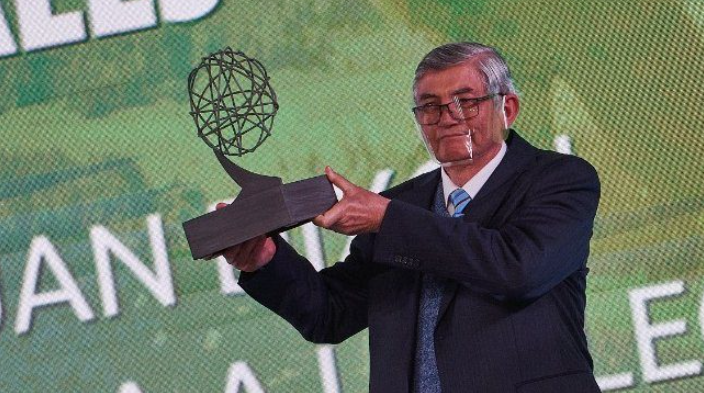
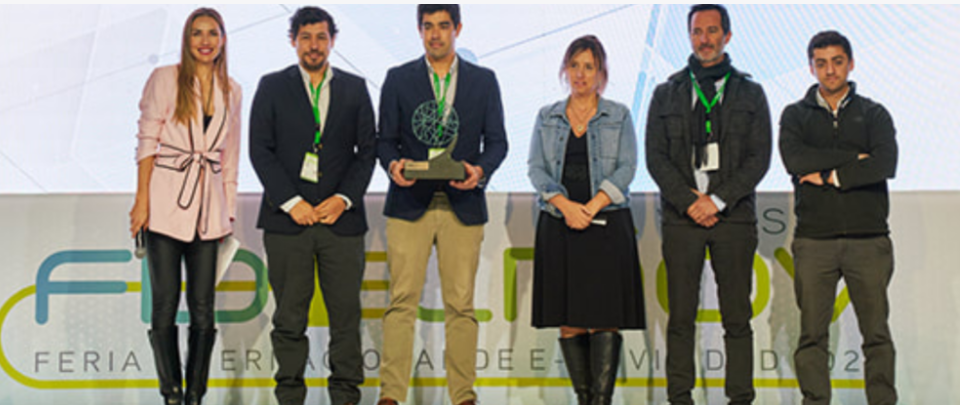
The Energy Conversion Laboratory (PEClab) of the Department of Electrical Engineering was honored at the 2022 International Electromobility Fair (FIDELMOV), recognized for its contribution to research, development, and training of advanced human capital in the field of electromobility. The award was given in the “Higher Education Institution” category for its significant commitment to the advancement of zero-emission technologies. During the fair, which was held on September 8 and 9 at Estación Mapocho, there were more than 50 stands and around 20 talks on electromobility. At the awards ceremony, professors Javier Pereda and Félix Rojas received the award on behalf of the PEClab team. Founded in the 1990s by Professor Emeritus Juan Dixon, PEClab is a leading research center in Latin America, specializing in power electronics, energy storage systems, electric and hybrid vehicles, renewable energies, and more. The results of its research are presented at international conferences and in journals, consolidating its position as a benchmark in the field. Translated with DeepL.com (free version)

PEClab Recognized at FIDELMOV 2022 Leer más ”

Recognition of UC Engineering academic Juan Dixon for his contribution to electromobility

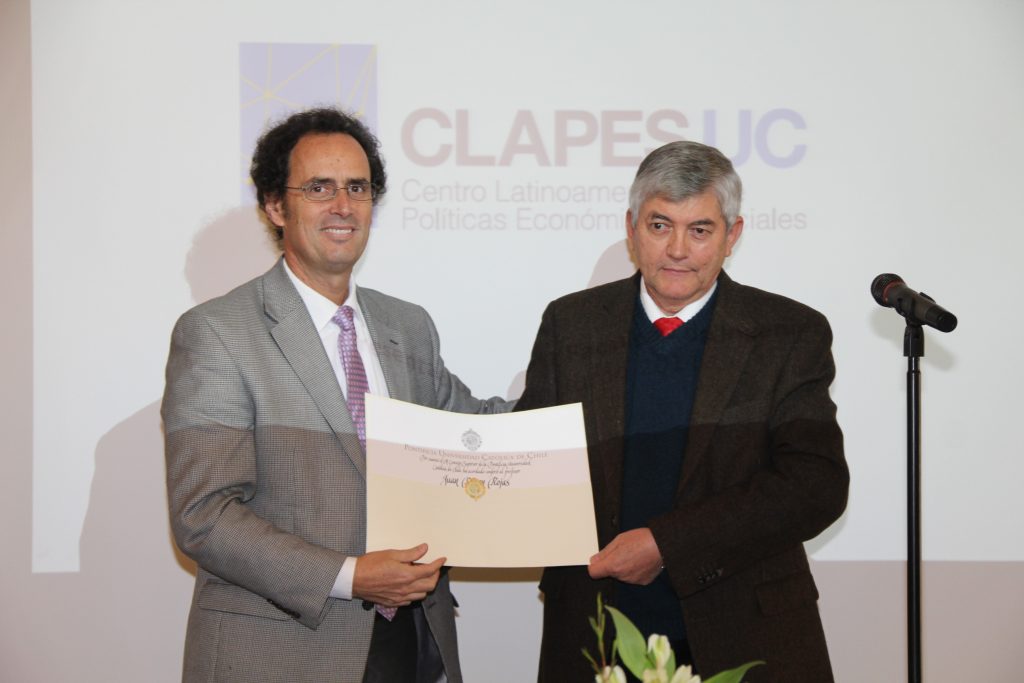
Recognition for UC Engineering academic for his contribution to electromobility During the International Electromobility Fair (FIDELMOV), the Catholic University received an award for more than 30 years of work on projects and training in electromobility. In addition, Juan Dixon, an academic from the UC School of Engineering, was honored for his leadership in the field. The UC was recognized in the “universities” category for its commitment to the development and promotion of electromobility and sustainable energy. It is the first university in Chile to conduct research and train students in this field. Juan Dixon, noted for his work on electric trains and trolleybuses, has been a pioneer in the research and development of electric vehicles in Chile, with projects dating back to 1998. In 2015, he was named professor emeritus for his contribution to electromobility. Dixon stressed the importance of continuing these developments and promoting the appropriate infrastructure to encourage the use of these vehicles. The fair, held virtually in 2020, highlighted the importance of these technologies for the environment and quality of life. In addition, the Undersecretary of Energy, Francisco López, highlighted the remarkable growth of electric vehicles in Chile and the improvement of the charging infrastructure nationwide. Translated with DeepL.com (free version)

Recognition of UC Engineering academic Juan Dixon for his contribution to electromobility Leer más ”

Innovative hybrid solar inverter with second-life batteries developed by UC will reduce energy costs in homes

Professors Javier Pereda and Félix Rojas, from the Electrical Engineering Department at the Catholic University (UC), presented a revolutionary hybrid solar inverter with second-life battery storage, designed to help families reduce their electricity costs. This device, a multi-port hybrid inverter, integrates with the home electrical grid and allows several appliances to be connected simultaneously, including electric car chargers. It also combines solar panels and reused batteries, optimizing energy use and reducing costs. The system detects consumption in real time and, when the home’s power is about to exceed its limit, automatically resorts to solar energy or batteries, improving self-consumption and avoiding investments in additional capacity. It has seven operating modes adapted to household habits, such as charging batteries at lower cost times or taking advantage of solar energy in the middle of the day. In August, a test will be conducted in a home in Santiago to demonstrate its benefits. The innovation, funded by FONDEF and supported by various institutions, is part of ANID’s Engineering 2030 program, which seeks to promote research and technological development in Chile. This advance represents an accessible, easy-to-install solution with great potential to transform energy consumption in the country’s homes.

Innovative hybrid solar inverter with second-life batteries developed by UC will reduce energy costs in homes Leer más ”

UC Engineering Scholar Collaborates with Professor from UTS, Australia

For three weeks, Javier Pereda, an academic from the Department of Electrical Engineering at the Catholic University and a member of Peclab UC, participated in the Key Technology Partnership (KTP) Visiting Fellow program, an initiative that supports researchers from institutions associated with the University of Technology Sydney (UTS) in Australia. This program seeks to strengthen collaborations on projects of mutual interest. In this collaboration, Pereda and Professor Ricardo Aguilera of UTS designed photovoltaic systems that can support the electrical grid more efficiently. Since solar panels do not produce energy at night, they devised a way for these systems to back up the grid at those times, thus improving the integration of renewable energies. In addition, the alliance between UC and UTS has strengthened their academic ties, allowing for future collaborations and the co-supervision of doctoral students. Also noteworthy is the recent completion of the research internship of Rodrigo Cuzmar, Pereda’s master’s student, who worked on experimental results for his thesis and a scientific article. An excellent example of international collaboration in renewable energy research and development!

UC Engineering Scholar Collaborates with Professor from UTS, Australia Leer más ”

Chilean technology driven by UC Engineering academics increases the power and autonomy of electric vehicles

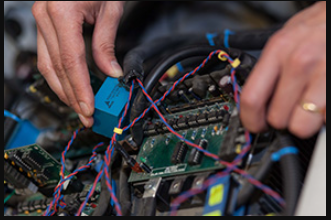
A major advance in the sustainable transport sector has been achieved by experts from the Department of Electrical Engineering at the Pontifical Catholic University of Chile. Thanks to an innovative power converter developed by academics led by Professor Javier Pereda, electric vehicles can now offer greater power and longer range. This development, supported by the National Commission for Scientific and Technological Research (Conicyt) through the National Fund for Scientific and Technological Development (Fondecyt), seeks to optimize the use of clean and high-quality energy in transportation. The key to this innovation lies in a more efficient, cost-effective, and compact power converter compared to conventional models, which allows the delivery of high-quality voltage and reduces costs and complexity in vehicle systems. Professor Pereda explained that one of the greatest challenges in electric vehicles is energy storage, as current batteries do not offer practical autonomy at reasonable costs. Therefore, the technology developed allows the use of more than one energy backup system, significantly improving the efficiency and lifespan of the batteries. In addition, the researchers have developed new optimization algorithms for the vehicles’ computer systems, which increase the quality of the energy delivered and, consequently, the power to the motor. This advancement not only benefits the vehicles themselves, but also has potential impact on the mass adoption of these models in the market, on the creation of charging stations, and on the management of energy storage systems. Javier Pereda emphasized that this small yet significant step positions Chile at the international forefront in renewable energy and sustainable transport technologies. “It shows that in our country there are laboratories and scientific capabilities to contribute to the development of clean and renewable energies,” he said. This advancement represents a concrete hope for a more sustainable and efficient transportation future, and demonstrates Chile’s commitment to technological innovation and environmental care.

Chilean technology driven by UC Engineering academics increases the power and autonomy of electric vehicles Leer más ”

iSolar UC Opens Solar Photovoltaic Plant

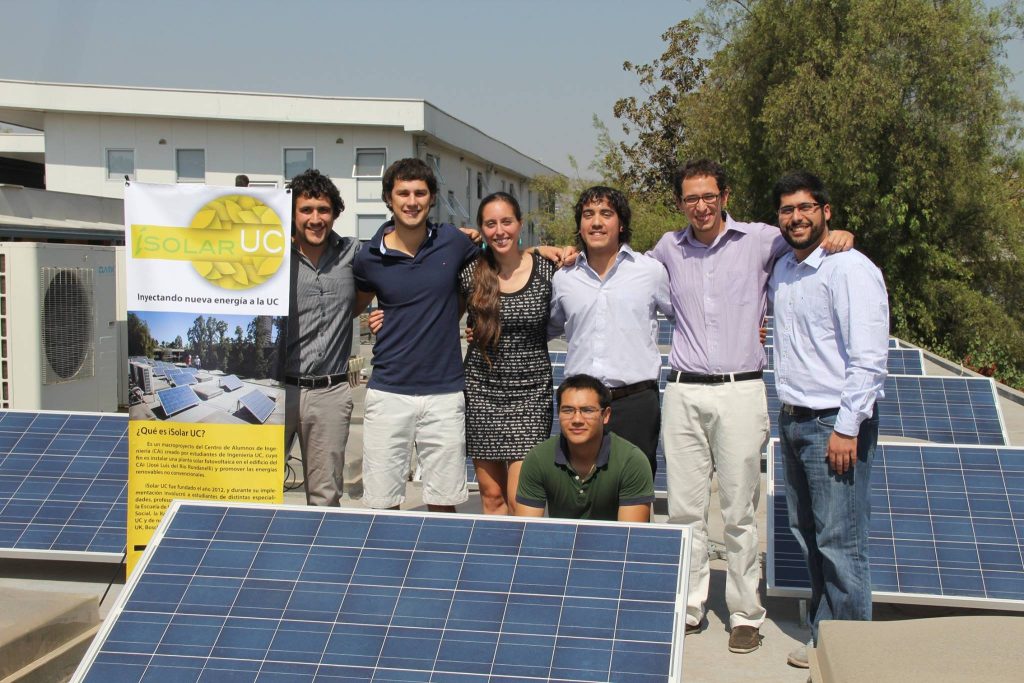
iSolar UC members, along with UC community and members of different energy companies (ABB, BOSCH, Bbosch, Greenheart UK) celebrated the inauguration of the photovoltaic plant (Link). The ceremony consisted in two moments. Firstly, Daniela Muñoz and Andrés Yenes (1st and 2nd iSolar UC Captains and Cofounders) presented the project history and technical details. After that, project members, Professor David Watts, Professor Javier Pereda and other special guests went to the roof of the building José Luis del Río Rondanelli to visit the plant and take the official photograph. General public could register in one of three guided tours to the plant that were performed at 15:00, 15:30 and 16:00.

iSolar UC Opens Solar Photovoltaic Plant Leer más ”

Cristián Garcés was approved as a new M.Sc. in Engineering

On Tuesday December 17, Cristián Garcés presented his master’s thesis “Position Sensor Based on N-bits Serial Codification“. The evaluating committee consisted on Professor Juan Dixon (DIE advisor), Professor Javier Pereda (DIE), Professor Ignacio Casas (DCC) and Mr. Mauricio Rotella (ABB). Cristián Garcés was evaluated with highest honors and he also received his Electrical Engineer’s degree.

Cristián Garcés was approved as a new M.Sc. in Engineering Leer más ”

Desplazamiento al inicio